


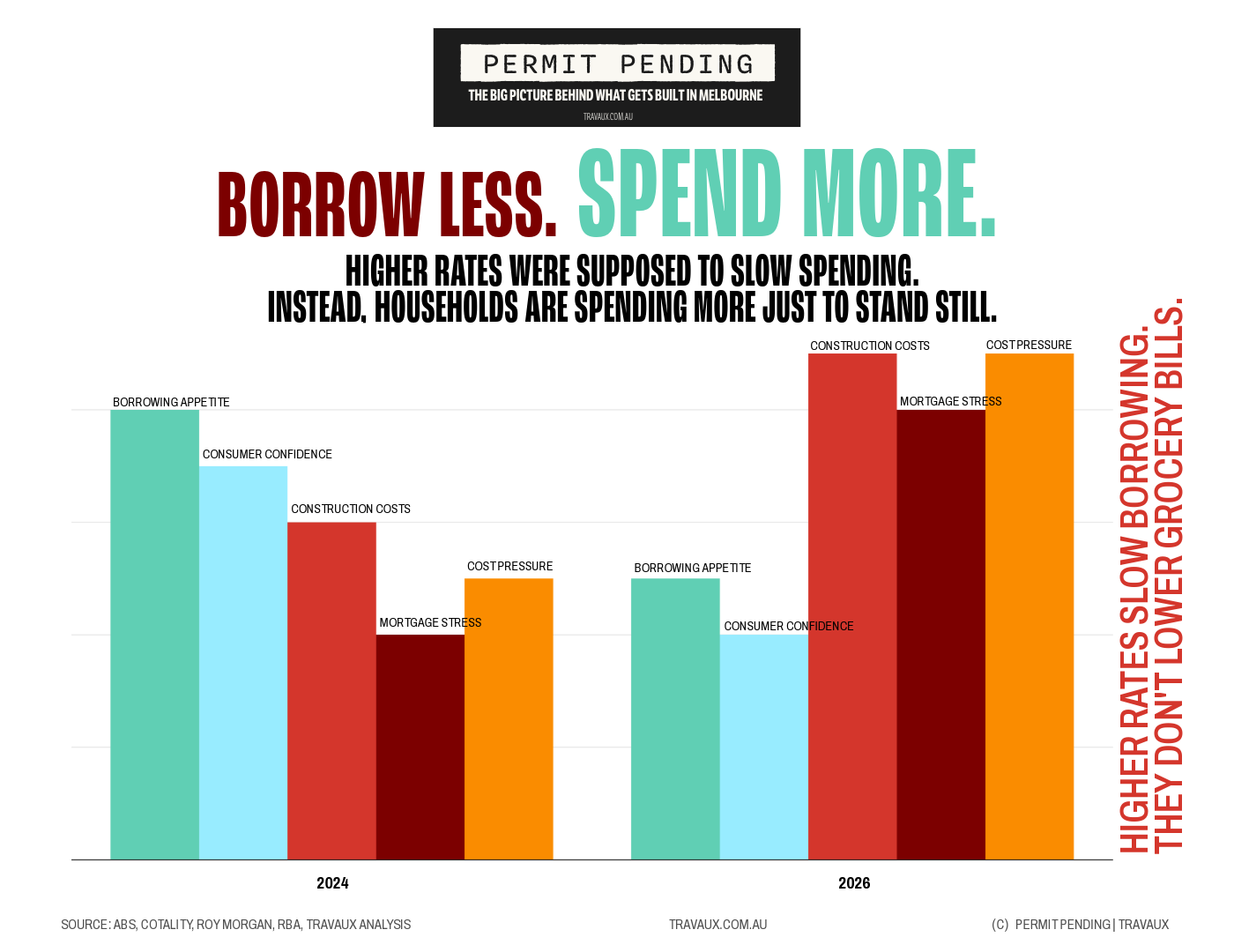
Interest rates may be slowing borrowing, but households and developers are still facing rising delivery pressure across almost every part of the market.
This week's key signals
- Lending indicators continue weakening
- Mortgage stress remains elevated
- Construction costs remain stubbornly high
- Policy ambition is increasing
- Housing delivery conditions continue tightening
Quick Commentary
The approvals may still exist, but the conditions required to actually deliver housing are becoming harder to stack up commercially.
Higher rates slow borrowing. They don’t lower grocery bills, contractor pricing or infrastructure constraints.
FAQs
Interest rates were supposed to cool the economy. Instead, households are borrowing less while paying more for almost everything. This week’s Permit Pending breaks down the growing pressures shaping housing delivery, development feasibility and buyer behaviour across Melbourne.
High housing demand alone does not guarantee viable projects. Rising construction costs, finance pressures, infrastructure delays and weaker lending conditions are making many developments harder to deliver profitably.
Higher interest rates reduce borrowing capacity, increase holding costs and place pressure on project feasibility. While planning approvals may continue, actual construction activity can slow significantly.
Labour shortages, infrastructure competition, insurance costs, supply chain volatility and ongoing materials escalation continue to affect project budgets and delivery risk across the construction industry.
Mortgage stress measures the financial pressure households experience meeting repayments and living costs. Higher stress levels can reduce buyer confidence, impact presales and affect overall housing demand.
Planning reform may speed up approvals, but approvals alone do not deliver housing. Feasibility, finance availability, construction capacity and infrastructure delivery remain critical constraints.