


Seriously, I could not make this shit up…
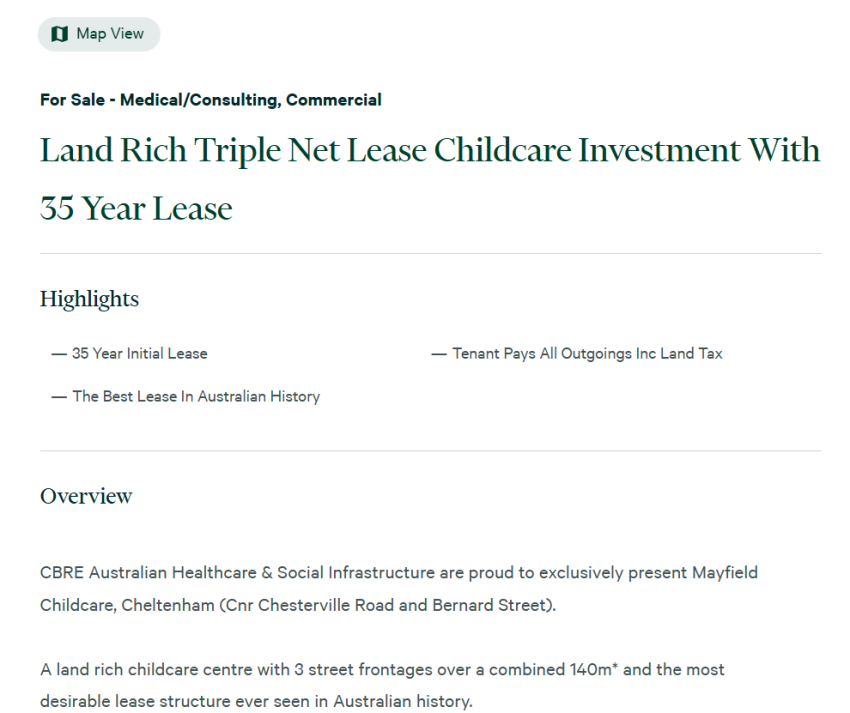
You’ve seen the listing. Glossy photos. Big yield. Words like “secure income,” “landmark corner,” and “triple net lease” thrown around like confetti.
* 35-year lease to Mayfield Childcare Limited * $609,993 per annum in rent (plus GST) * Triple net lease (tenant pays all outgoings) * 2,598m2 corner block zoned Commercial-1 * Listed as a “trophy investment”
Go on, click through to the link — I’ll wait.
This one caught my eye because I know the site well. I live in the City of Kingston, and at Travaux we pride ourselves on knowing this area inside and out. So when this popped up during my weekly scroll through real estate, planning and building updates, I took a closer look.
Upon closer inspection…
I also know this property on a more personal level.
Twenty-one years ago, when my son was a baby, I was living in Cheltenham and researching childcare options in the area. This site — then operated by another provider — was already functioning as a childcare centre. Even then, I had serious concerns about its location, especially where the outdoor play areas were placed.
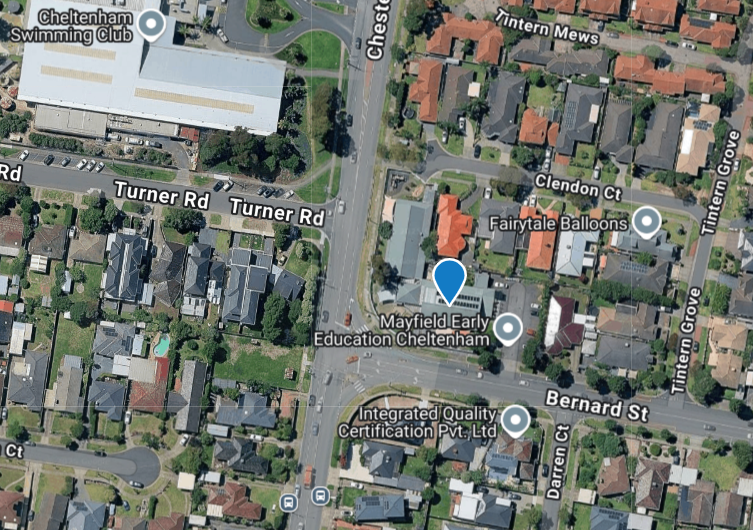
The play spaces wrap around the outside edges of the site, pushed right up against the traffic, while the building sits in the middle like a buffer. Parking is tucked further in, away from the road. And even as a sleep-deprived, soon-to-be single mum trying to figure out my return to work, I didn’t apply.
Why? Because I couldn’t get past the idea that my child would be breathing in heavy traffic fumes every time he stepped outside.
And now, more than two decades later, I still drive past and see kids playing there. The outdoor areas are still right on the edge. The roads are even busier. And there’s still no meaningful protection from the noise or pollution.
But Bro, it’s a Trophy Investment.
So when I saw that this site — now leased to a national operator — was back on the market as a “trophy investment,” I couldn’t ignore it. I dug in a little deeper. And what I found turned into this article.
I hope it prompts you to look around and notice what we’ve normalised.
Is this okay?
On a societal level — are we really okay with placing children’s wellbeing second to traffic flow and yield?
We know the research. We know there are links between traffic pollution, lung cancer and childhood development. We know children need fresh air and safe outdoor space.
But — hey, profit.
Are we actually good with this?
Or am I just the weird one?
Let’s unpack it a little. I’d love to hear what you think — and what you believe should be done.
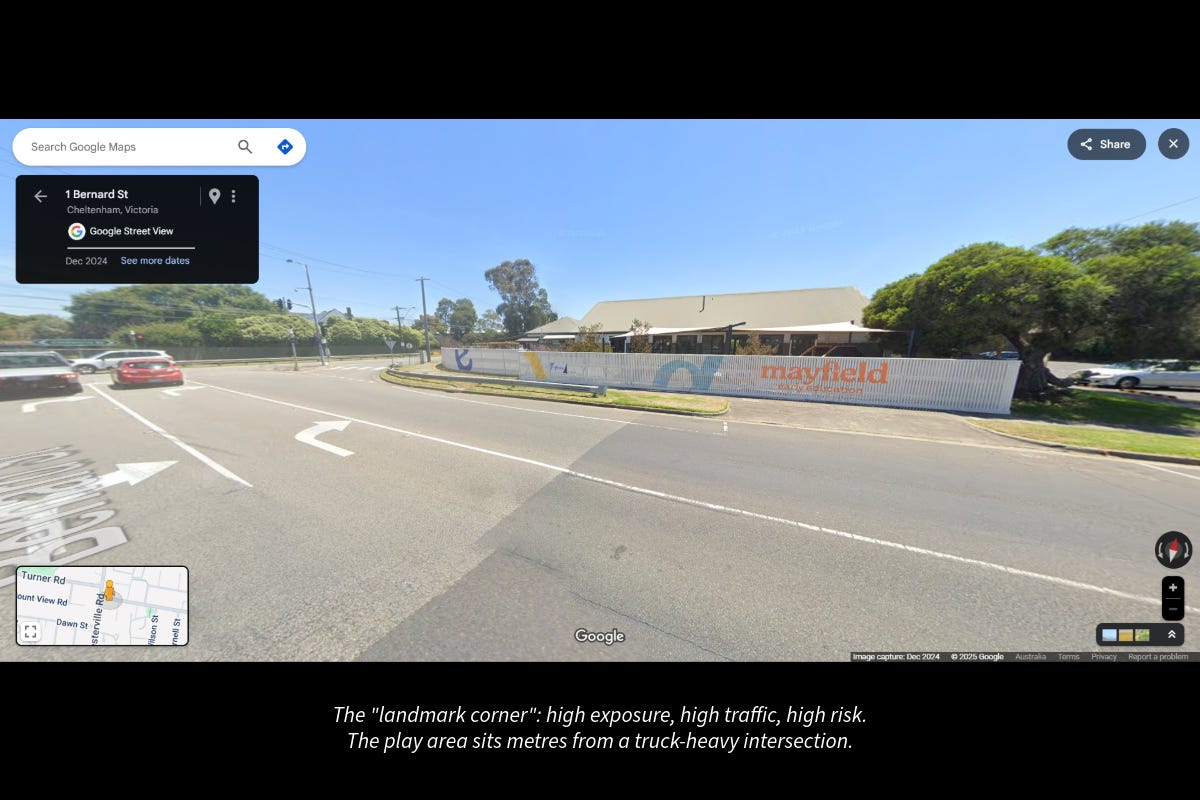
Here’s the truth: 1A Bernard Street, Cheltenham isn’t a childcare centre dream — it’s a diesel-scented nightmare.
The Brochure Says
Sounds too good to be true?
That’s because it is.
Who is Mayfield Childcare Limited anyway?
An ASX-listed company operating around 45 centres across three states. Their lease strategy is corporate – long terms to support their financial model. That doesn’t mean the site is ideal. It just means they’ve made it someone else’s problem… for 35-years.
Let’s Walk the Site
Stand at the corner of Chesterville Road and Bernard Street during morning peak:
- Trucks idle at both lights.
- The intersection is jammed.
- The play area opens straight onto a high-volume traffic route.
- There is no meaningful setback from the road, no acoustic buffer, no pollution protection and no vegetation shielding.
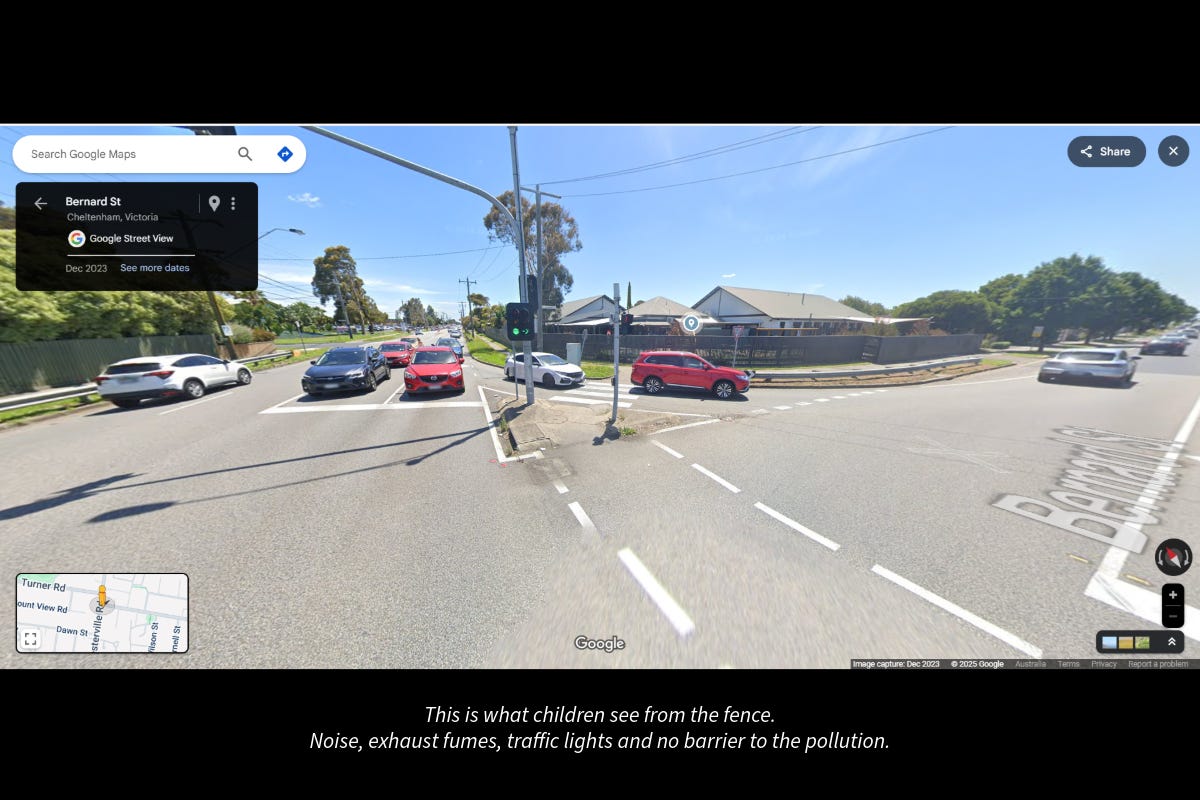
This is not a ‘high-exposure site’ – it’s an overexposed one. And the only thing children are guaranteed to absorb here is a steady stream of fine particulates and brake dust.
So Why the Long Lease?
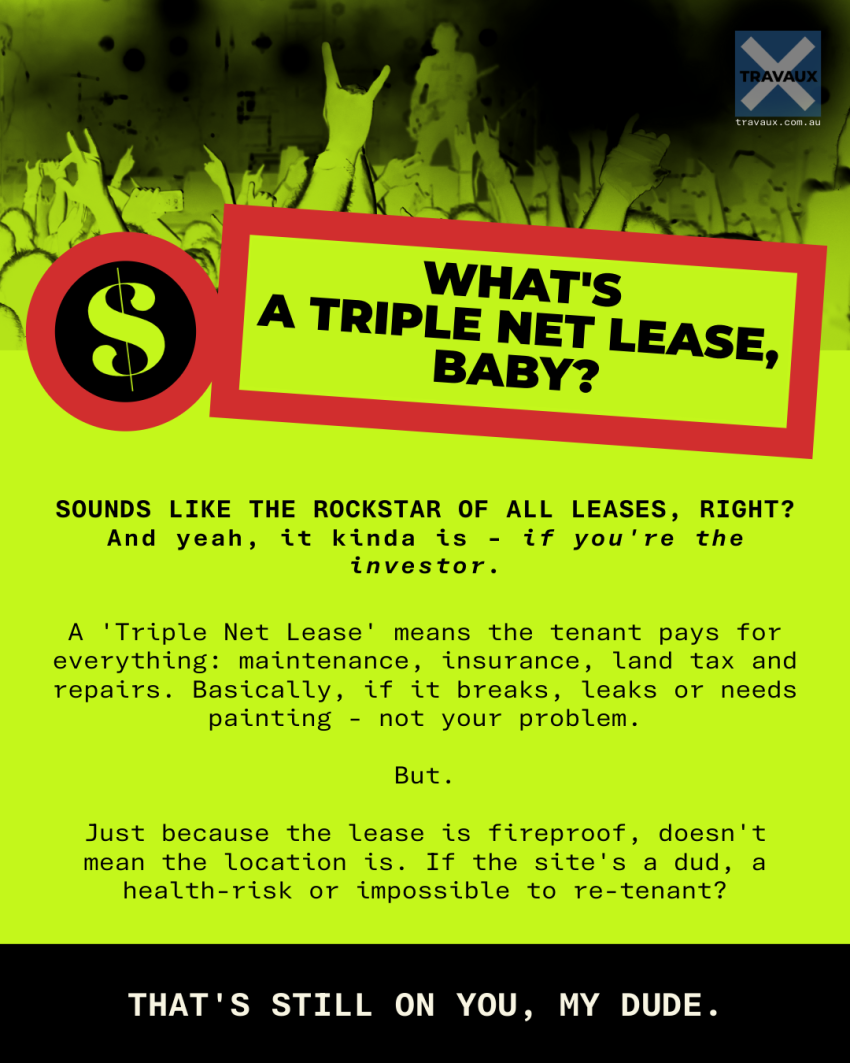
Because the lease is the product, not the land.
This is being pitched to SMSFs and passive investors who are trained to look at returns, not risks.
The long lease term is designed to create the illusion of security. But here’s the reality:
- Mayfield is a listed childcare operator, not a local family-run centre. Long leases help their balance sheet, not necessarily their occupancy.
- Sites like this are difficult to recruit for, especially as parents become more health-conscious. You can see where it’s located and how it’s rated in Google Maps.
- If Mayfield ever wants to walk, sublease or sell the lease interest, you inherit a liability with very few viable alternative uses.
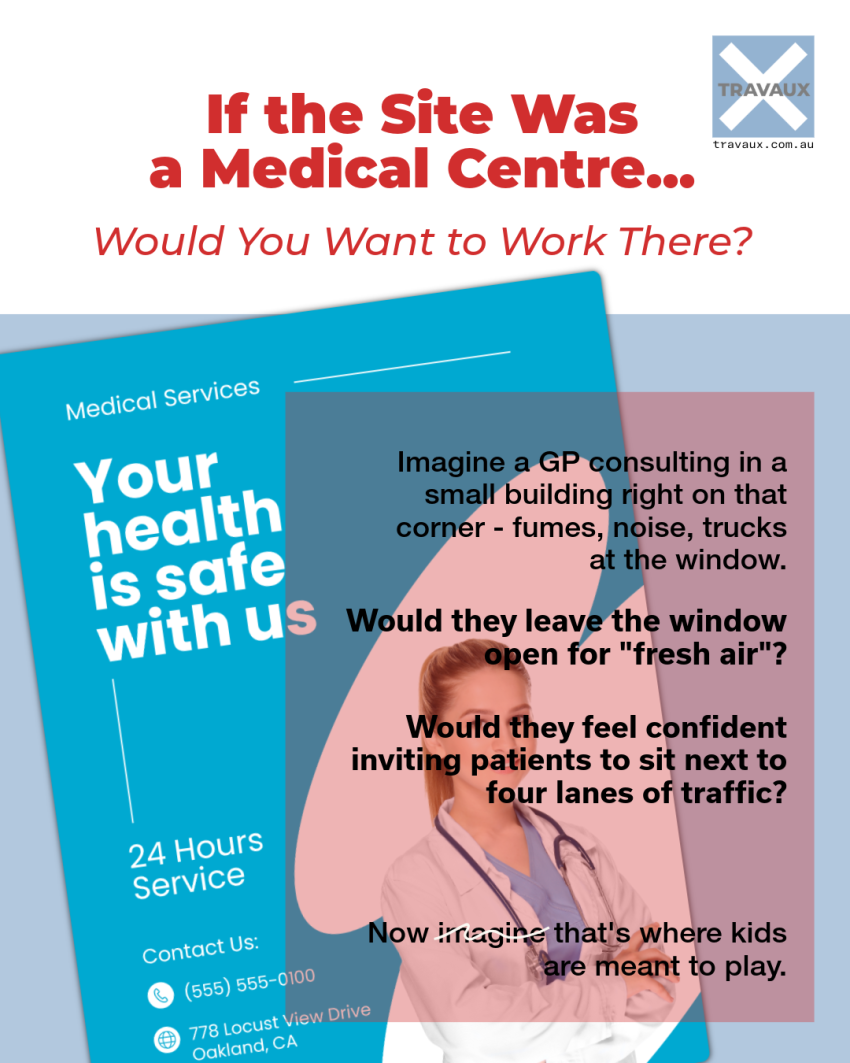
And while this site is being marked as suitable for “medical or consulting” use, ask yourself this:
Would a GP consult in a space with that level of traffic exposure?
Would a psychologist hold sessions next to an idling B-double?
Even in a health context designed for adults, this corner would (or at the very least should) raise red flags – so why is it acceptable for toddlers?
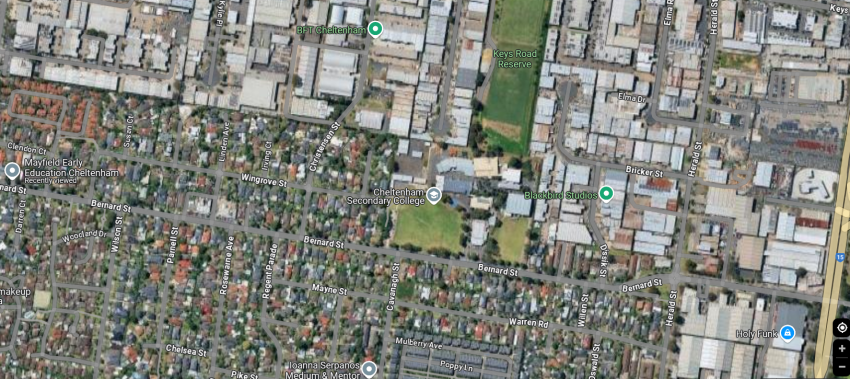
Heritage Overlay? Yep.
It might not protect that building, but it does complicate demolition, development and adaptive reuse. Welcome to the zoning straightjacket.
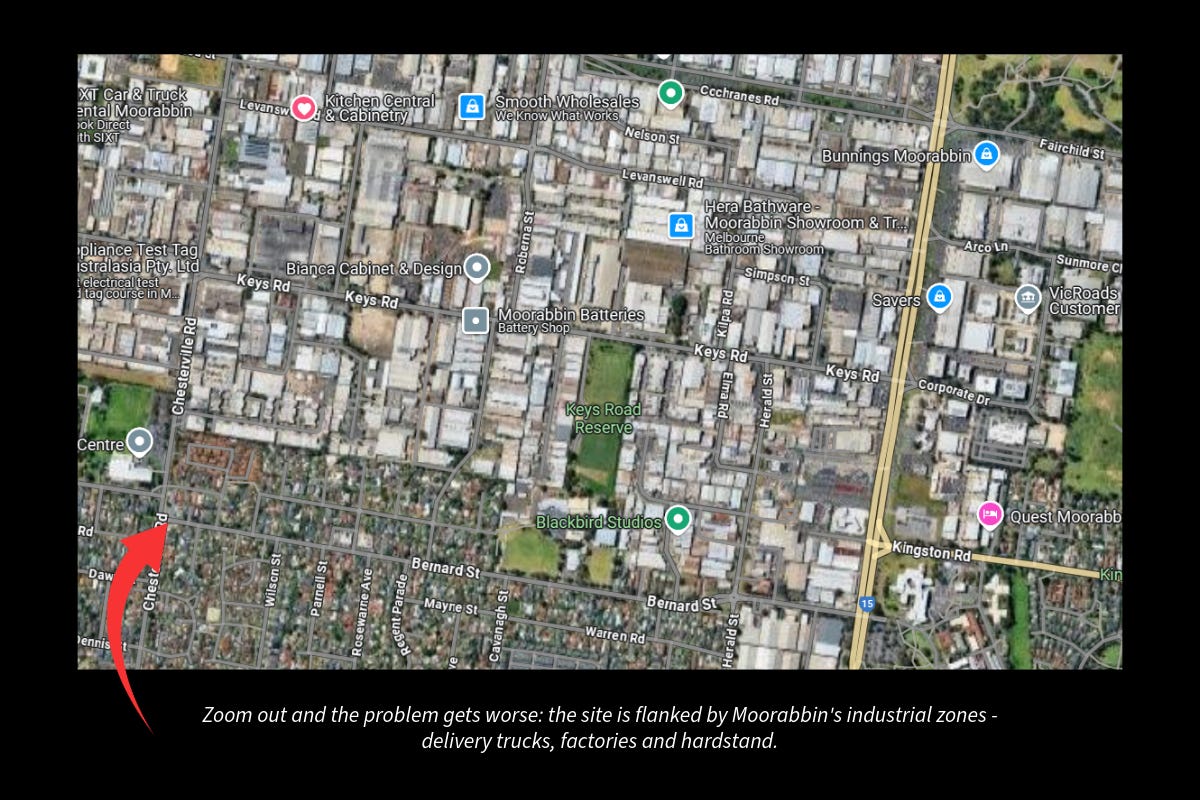
What Happens When You Look Deeper?
You realise this site has been a childcare centre under different names for decades – despite being surrounded by major roads, industrial uses and constant emissions.
You realise the play areas aren’t just close to traffic – they’re immersed in it. You realise this is a prime example of why:
- Viability doesn’t equal liveability
- Council tick-box planning isn’t good enough
- And investing with investigating is a trap
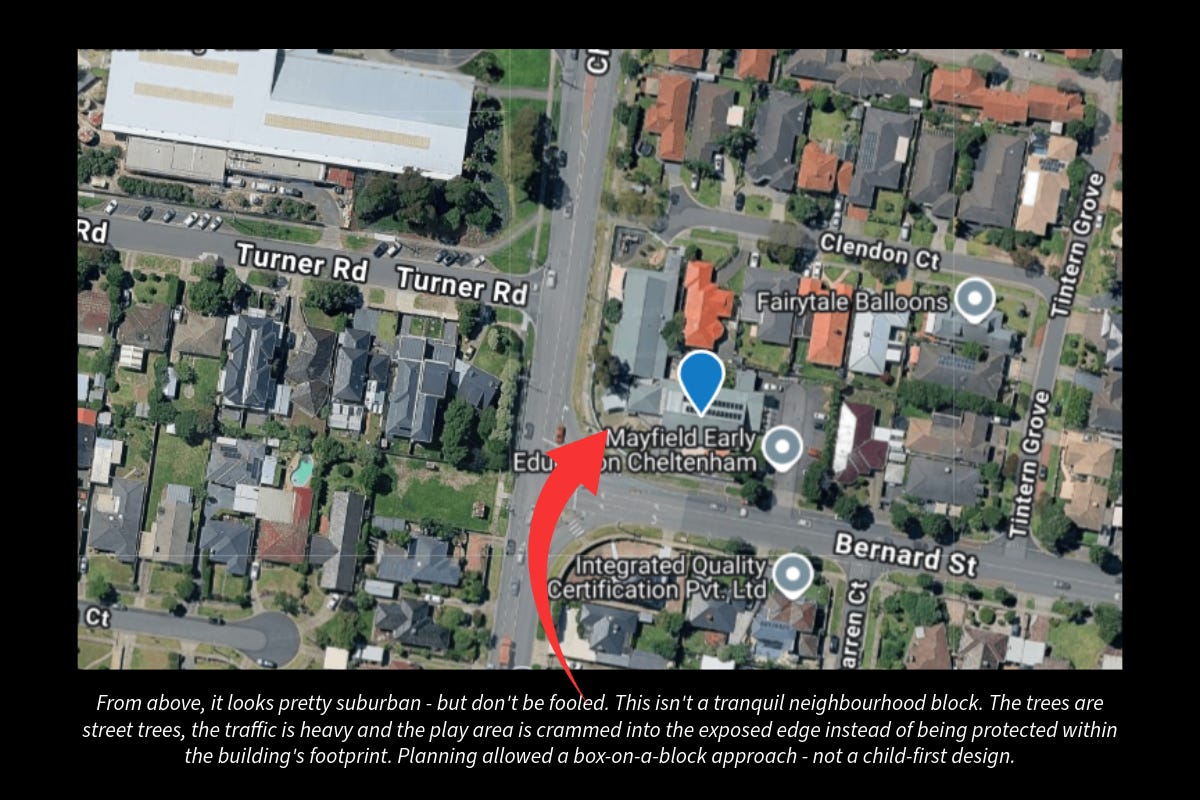
Want to Make This Site Healthier? Here’s What It Would Take
To buffer children from traffic pollution and noise, a new operator or developer would need to retrofit the site with a very minimum of:
- Acoustic Fencing – 2.4-3m high
This would reduce road noise, block direct emissions
Cost: approximately $350-$450/lm- Green screening – bamboo hedge or ivy wall on frame
This would help absorb particulates and soften the site edge
Cost: between $120-$200/m2 installed + irrigation- Mechanical ventilation + HEPA air filtration
To filter airborne pollutants inside rooms
Cost: $25,000-$45,000 retrofit- Reconfiguration of internal layout
Move the play areas to the rear of create an internal courtyard
Cost: $80,000-$150,000 (if feasible)- UV and pollutant-reducing window films
These would reduce heat and fine particulate ingress
Cost: between $90-$150/m2- Acoustic glazing on road-facing rooms
Noise control
Cost: approximately $800-$1,200 per window, installedTotal estimated buffer cost: $150-$300k (not including potential redesign or planning reapproval). This doesn’t include cost of closing for minimum 6mths, loss of fees, staff costs during time, etc.
The reality is that this IS NOT a feasible cost for any investor or owner to buy into. Yes, these costs would destroy any profit for a long period and who would invest in something with this much cost? I certainly wouldn’t, but that’s precisely the problem. Retrofitting and reconfiguring won’t really fix the problem, just lessen the damage. So can the ‘genie’ even be put back into the bottle? Unlikely.
So What Should You do?
If you’re an investor: Ask whether a lease alone is worth the reputational risk of a polluted, hard-to-reposition site (oh, and there’s those pesky kiddies to think about too).
If you’re a developer: Ask whether this is land you can ethically and realistically improve – without compromising air quality, community, trust or good design (rezoning potential or new use may be a slim chance).
If you’re a planner or policymaker: Ask how this was ever approved – and whether it should ever be approved again (and to be fair, the current generation of urban planners have a massive focus on thoughtful, healthy and promising urban landscape & community. Problem is, they can only work within policy and if State ministers or VCAT intervene on the side of profit-first developers, what are the options?).
And if you’re a parent? Ask how we’re still OK with sending kids into spaces like this.
Because no child should play next to a truck exhaust.
And no lease should excuse a bad location.