
There has been a lot of noise this week about interest rates, global tensions and rising oil prices.
It can feel overwhelming, especially if you’re planning your first development or trying to make sense of your feasibility.
The key takeaway is actually quite simple:
Costs are rising, borrowing is tighter and buyers are more limited in what they can afford.
This combination is quietly changing what projects are viable – and how you need to assess risk.
1. Interest rates are changing how deals work
Higher interest rates increase:
- your loan repayments
- your holding costs
- your overall project risk
They also reduce how much your future buyer can borrow.
This means your project needs to be more financially resilient from the start.
2. Construction costs are not stabilising as much as it seems
You may hear that prices are “settling” – but that doesn’t mean they are going down.
Global factors like oil prices affect:
- transport of materials
- manufacturing
- labour and subcontractor pricing
Even short-term increases tend to become long-term cost increases.
3. Buyer budgets are becoming more constrained
This is one of the most important points for new developers.
Your final sale price depends on:
- what buyers can borrow
- how confident they feel
- what alternatives they have
You cannot assume your end value will keep increasing.
4. What this means for your feasibility
A feasibility is not just a spreadsheet – it is your RISK MANAGEMENT TOOL.
Right now, you should be:
- allowing for higher build costs
- including realistic timeframes
- increasing contingency
- testing your end values conservatively
A project that only works under perfect conditions is not a safe project.
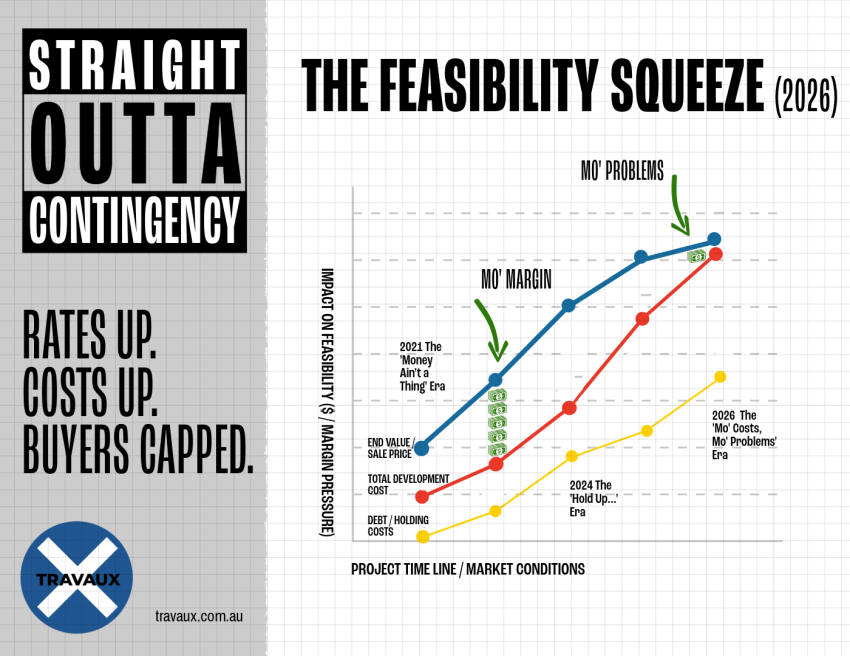
5. The "feasibility squeeze" explained simply
Here’s what’s happening:
- costs are increasing
- finance is more expensive
- end values are capped
This is called the feasibility squeeze.
6. The biggest mistake new developers make right now
To make the numbers work, many people start cutting costs:
- cheaper finishes
- simpler design
- reduced detailing
The product no longer matches the price you need to achieve.
This can make your project harder to sell – even if it was originally well designed.
7. What you should do instead
Focus on:
- realistic feasibility assumptions
- strong, efficient design
- understanding your buyer clearly
- building in contingency
Final takeaway
The current market is not broken – it is more disciplined.
That’s a good thing.
But it does mean:
You can do this. Get in touch if you need more support.