

Why projects fall apart before construction even starts
Most people assume projects fall apart during the construction phase.
Cost overruns.
Delays.
Builder issues.
But in reality, most projects fail much earlier than that – before construction even begins.
They fail in feasibility, planning and the decisions made when everything still looks like it “should” work.
The problem isn't construction
By the time a builder is involved, a lot of the key decisions have already been made:
- the yield has been assumed
- the design direction is set
- expectations are formed around cost and income
At that point, the project isn’t being created – it’s being tested.
And that’s where the problems start to show.
Where projects actually break down
Across most projects, the same issues come up again and again.
Not because the idea is bad – but because the structure behind it hasn’t been resolved.
- 1. YIELD DOESN'T EQUAL FEASIBILITY
- 2. DESIGN AND COST ARE DISCONNECTED
- 3. PLANNING RESHAPES THE PROJECT
- 4. BUILDERS ARE BROUGHT IN TOO LATE
- 5. THE NUMBERS "WORK" - BUT ONLY ON PAPER
1. YIELD DOESN'T EQUAL FEASIBILITY
A site might “fit” a certain number of dwellings.
That doesn’t mean it works.
Once you factor in:
- real construction costs
- planning constraints
- site conditions
- delivery risk
the margin often disappears.
This is one of the most common gaps in early feasibility – assuming that what fits will automatically stack.
2. DESIGN AND COST ARE DISCONNECTED
Good design doesn’t fail at concept stage.
It fails when it meets cost reality.
If design decisions are made without:
- build cost alignment
- construction input
- delivery understanding
then the project is forced into:
- redesign
- value engineering
- compromise
or it simply doesn’t proceed.
3. PLANNING RESHAPES THE PROJECT
Planning is often treated as a step in the process.
Reality is, it shapes the entire outcome.
Setbacks, overlooking, access, overlays – these don’t just affect approval.
They affect:
- yield
- layout
- cost
- viability
Ignoring that early creates a false sense of feasibility.

4. BUILDERS ARE BROUGHT IN TOO LATE
Many builders are first engaged at pricing stage.
At that point, they are:
- pricing a fixed concept
- working within set expectations
- expected to “make it work”
If the project doesn’t stack at this stage, the issues isn’t construction.
It’s that the project was never properly structured.
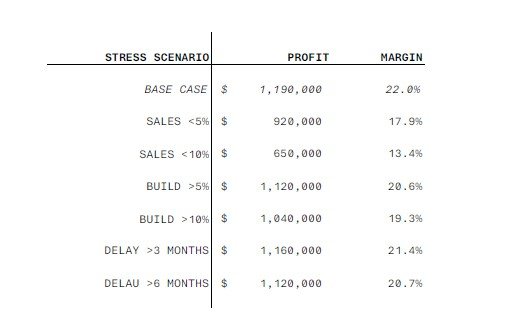
5. THE NUMBERS "WORK" - BUT ONLY ON PAPER
This is the most dangerous version.
The feasibility looks “close enough”:
- the margin is there
- the concept fits
- the assumptions feel reasonable
But once real-world factors are applied:
- costs shift
- constraints tighten
- timelines extend
and the deal quietly stops working.
The common thread
In almost every case, the issue isn’t one number.
It’s the interaction between:
- feasibility
- planning
- design
- delivery
When those aren’t aligned early, the project becomes unstable.
Why this matters
By the time these issues are discovered:
- time has already been spent
- design work has already been done
- expectations are set
Changing direction becomes:
- more expensive
- more difficult
- more constrained
That’s why early-stage structuring matters.
What actually needs to happen earlier
Before a project moves into planning or detailed design, it needs to be tested as a whole.
Not just:
- “does it fit?”
- or “does the feasibility look okay?”
But:
- does it stack financially
- does it work within planning constraints
- can it be built as designed
- can it be delivered within realistic assumptions
The reality
There are plenty of sites that look like they should work.
They just don’t – once everything is properly aligned.
And that’s where most projects fall over.
Not on site.
But long before they ever got there.
If you’re working through a project and the numbers, design or constraints aren’t aligning, it’s worth testing it properly before moving forward.
Because once the project is locked in, fixing it becomes significantly more difficult.
Frequently Asked Questions
Many projects don’t fail because the idea was bad. They fail because early assumptions around feasibility, planning, finance, delivery and coordination were never properly tested against real-world conditions. Below are some of the common questions emerging across residential development and pre-construction planning.
Many projects begin falling apart during the pre-construction phase due to unrealistic feasibility assumptions, planning constraints, escalating costs, consultant coordination issues or funding pressure. In many cases, the visible design is not the real problem – the underlying financial structure, project timing or delivery strategy is.
Pre-construction risk refers to the financial, planning, design and coordination issues that can affect a project long before physical construction begins. This can include feasibility gaps, planning delays, authority requirements, consultant conflicts, cost escalation, market shifts and documentation issues that place pressure on delivery outcomes.
Feasibility studies help test whether a proposed project remains financially and practically viable under real-world conditions. A strong feasibility should account for planning constraints, escalation risk, holding costs, delivery timing, finance pressure and market sensitivity – not just ideal-case assumptions.
Construction cost escalation can significantly change project viability by increasing build costs, finance pressure and contingency requirements. Projects operating with minimal buffer are particularly vulnerable to cost increases, specification changes and delays that occur between early feasibility and actual construction delivery.
Small projects can become financially risky when borrowing assumptions, sale prices, build costs or project timing are overly optimistic. Rising interest rates, longer approval timelines, consultant coordination issues and market softening can quickly reduce feasibility margins on projects that initially appeared viable.
Planning requirements, authority conditions and consultant coordination often shape project outcomes long before construction begins. Poor coordination between planning, design, engineering, finance and delivery assumptions can create delays, redesign costs and approval complications that significantly affect feasibility and delivery confidence.
Contingency requirements vary depending on project complexity, site conditions, authority requirements and market conditions. In periods of construction escalation and delivery uncertainty, relying on extremely tight contingencies can expose projects to significant financial pressure if costs or timelines shift unexpectedly.
Some projects appear viable because feasibility assumptions rely on ideal conditions rather than realistic delivery scenarios. A project may technically “work” in a spreadsheet while still carrying significant exposure to escalation, finance pressure, planning complexity, authority delays or delivery coordination risk.