


Australia is having a housing conversation...
A recent article by Stefan Alipan argued that Australia’s housing debate has become obsessed with counting dwellings while paying far less attention to the lived experience inside them. Whether or not you agree with every criticism, it raises an important question: when we talk about solving the housing crisis, are we measuring success by the number of homes we approve, or by the quality of life those homes actually provide?
Or at least we think we are.
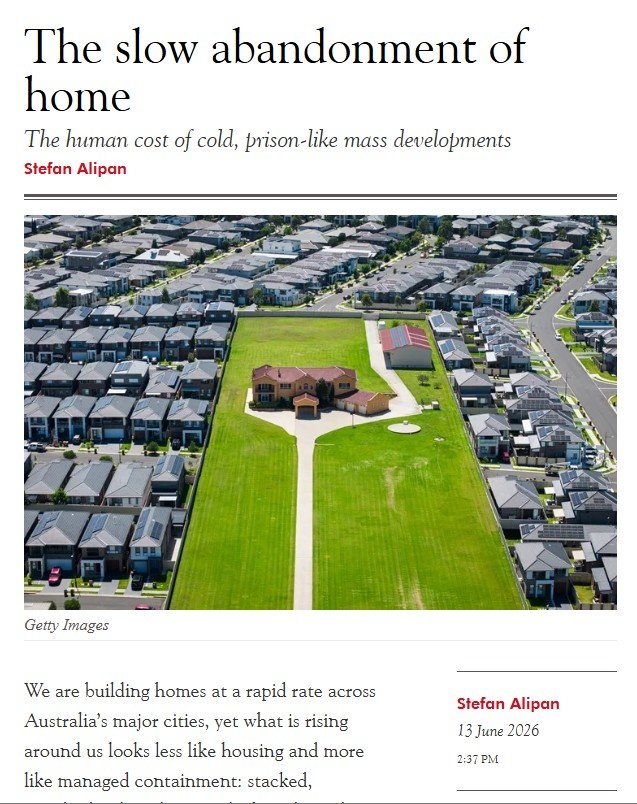
Every week we hear about housing targets, dwelling approvals, housing starts, completions, planning reform, density, rezoning and fast-tracked developments.
Politicians talk about numbers.
Developers talk about feasibility.
Councils talk about growth.
Advocates talk about supply.
Yet somewhere along the way, we seem to have stopped talking about homes.
A recent article by Stefan Alipan explored the lived experience of many modern apartment developments and asked a question that deserves more attention: what kind of life are we actually creating inside the dwellings we are rushing to build?
Whether you agree with every point he makes or not is almost beside the point.
The bigger question is an important one.
When did housing become a numbers exercise?
The Metrics We Measure
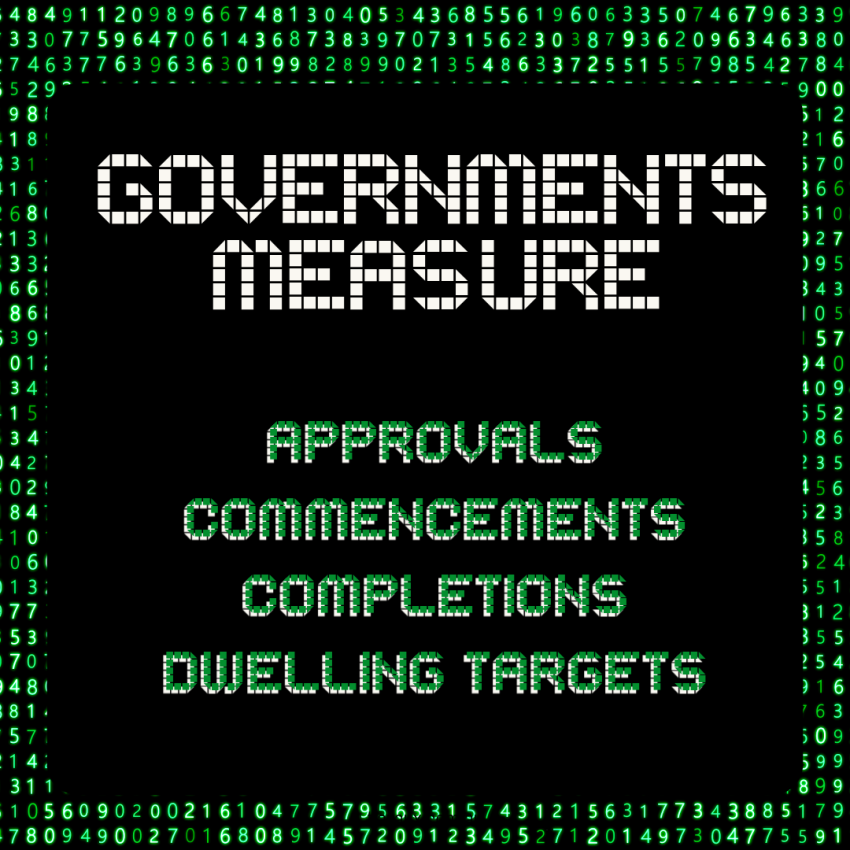

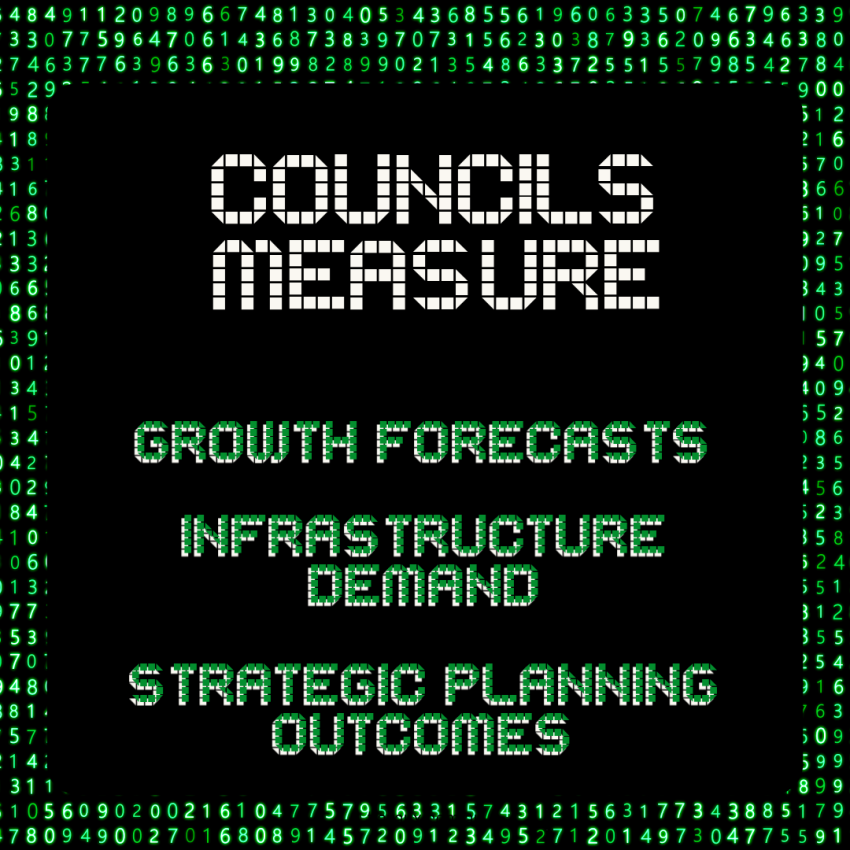
All of these things matter.
But none of them describe what residents actually experience.
Residents experience sunlight.
They experience privacy.
They experience noise.
They experience storage.
They experience whether a family can comfortably live in a dwelling for ten years rather than two.
They experience whether working from home is practical.
They experience whether the home feels like a refuge or simply a place to sleep between obligations.
Those outcomes rarely appear in a housing target.
The Wrong Debate
Much of Australia’s housing discussion has become trapped in a false choice.
Build more housing.
Or protect neighbourhood character.
Approve more apartments.
Or oppose development.
Support growth.
Or support residents.
Reality is more complicated.
The real question is not whether we need more housing.
We do.
The real question is what kind of housing we are delivering and whether the systems around it are producing the outcomes we actually want.
A poor-quality apartment is still housing.
But it may not be the type of housing that supports families, long-term communities, ageing in place, social connection or wellbeing.
Simply counting dwellings tells us very little about whether we are creating successful places to live.
This Is Why Permit Pending Keeps Returning to Delivery
Regular readers may have noticed a recurring theme throughout this series.
We keep coming back to delivery.
Not because planning doesn’t matter.
Not because construction doesn’t matter.
Not because finance doesn’t matter.
But because all of those things are connected.
Australia’s housing challenge is often framed as a planning problem.
Or a construction problem.
Or a developer problem.
Or a finance problem.
In reality it is a delivery problem.
Housing outcomes are shaped by an entire chain:
- Planning policy
- Infrastructure provision
- Land supply
- Development feasibility
- Finance
- Procurement
- Construction
- Regulation
- Market demand
Weakness in any one part of the chain affects the final product.
By the time someone walks into a completed apartment, every decision made across that delivery chain is visible in the result.
The size of the rooms.
The amount of sunlight.
The quality of materials.
The level of privacy.
The flexibility of the space.
None of those outcomes happen by accident.
They are the consequence of hundreds of decisions made long before construction begins.
RELATED READING
NEED SOME INSPIRATION?
Planning a renovation, new build or future project? Explore our Pinterest boards for real-world examples of homes, materials, layouts and design ideas that align with the topics discussed in this article.


The Missing Conversation
What concerns me most is that we increasingly treat housing quality as a luxury rather than a necessity.
Natural light is treated as negotiable.
Privacy is negotiable.
Durability is negotiable.
Family-friendly design is negotiable.
Long-term adaptability is negotiable.
Yet these are the very things that determine whether a dwelling remains desirable and functional decades from now.
Australia already has examples of medium-density housing that people actively seek out.
Many apartment buildings constructed in the 1960s and 1970s continue to command strong demand because they provide generous room sizes, natural ventilation, sunlight and layouts that work.
They prove that density and liveability are not mutually exclusive.
The challenge is not density itself.
The challenge is delivering density well.
Enjoyed this analysis?
Subscribe to Permit Pending for practical insights into housing, planning, development and the systems shaping Australia’s build environment.
What We Should Be Measuring
Perhaps the most important question is this:
How will we know when we have succeeded?
Will success be measured by approval numbers?
By dwelling targets?
By the number of cranes on the skyline?
Or will it be measured by whether people genuinely want to live in the homes we are creating?
Because housing is not simply a planning outcome.
It is not a spreadsheet.
It is not a political target.
It is the physical setting for most of life.
And if we lose sight of that, we risk solving a housing shortage while creating a liveability problem that lasts for generations.
That is why this series continues to focus on housing delivery.
Not because housing numbers don’t matter.
But because the quality of the outcome matters too.
The goal should never be to build more housing at any cost.
The goal should be to build enough housing, in the right places, delivered through systems that create homes people actually want to live in.
FAQs
No. Australia needs more housing, but supply is only part of the challenge. The quality, location, affordability and liveability of housing also matter. A successful housing system must deliver enough homes while ensuring they remain practical, durable and desirable places to live.
Housing quality refers to the features that influence everyday living, including natural light, privacy, ventilation, room size, storage, durability, accessibility and adaptability. These factors affect comfort, wellbeing and the long-term usefulness of a home.
People spend a significant portion of their lives at home. Poorly designed housing can affect mental health, family life, social connection, productivity and long-term satisfaction. Housing should support daily life, not simply meet minimum compliance requirements.
Not necessarily. Many successful medium-density and apartment developments demonstrate that density and liveability can coexist. The challenge is creating planning, design and delivery systems that encourage both housing supply and quality outcomes.
The housing delivery chain includes all the systems that influence whether homes are built successfully, including planning policy, infrastructure, land supply, development feasibility, finance, procurement, construction and regulation. Weaknesses anywhere in the chain can affect housing outcomes.
Housing outcomes are shaped by more than planning approvals alone. Permit Pending examines the broader delivery ecosystem because housing affordability, quality and supply are interconnected. Understanding how projects move from policy to completed homes helps explain why many housing challenges persist.
Many apartments can be suitable for families when they provide adequate space, storage, natural light, privacy and access to amenities. The issue is not apartment living itself, but whether developments are designed to support long-term occupation and changing household needs.
Liveability typically includes access to natural light, privacy, thermal comfort, storage, flexible spaces, good ventilation, noise control, outdoor access and connection to services, transport and community infrastructure. These factors contribute to long-term wellbeing and quality of life.
Many apartment buildings constructed during the 1960s and 1970s feature larger room sizes, better natural ventilation, more generous proportions and durable materials. Their continued popularity suggests that housing quality remains highly valued by residents.
Housing success should be measured by more than approval numbers or dwelling targets. Important indicators include housing quality, affordability, long-term durability, resident satisfaction, access to infrastructure and whether homes support the needs of individuals, families and communities over time.
What do you think?
Are we measuring the right housing outcomes, or have we become too focused on dwelling targets and approval numbers? Join the discussion below.