


Housing isn’t necessarily becoming more affordable. It’s becoming less viable to deliver.
There’s been no shortage of commentary this week about Australia’s housing market.
Prices have softened.
Buyer confidence has eased.
Auction clearance rates have slipped.
In several capitals, values are now lower than they were a few months ago.
For many Australians, that sounds like good news.
After years of rapid price growth, surely a cooler market is exactly what we’ve been waiting for?
On the surface it looks encouraging.
But I’m not convinced it’s a reason to celebrate.
Because we’re asking the wrong question.
Rather than asking where prices go next, we should be asking what happens to housing delivery when projects become less viable.
Lower house prices don’t automatically mean better affordability. They can also mean fewer homes get built. Yet much of the public conversation still treats lower prices and greater affordability as though they’re the same thing.
They’re not.
Unfortunately, lower house prices don’t necessarily mean more homes will be delivered. In fact, if fewer projects remain commercially viable, a cooling market can actually make the housing shortage harder to solve.
That’s the story this Dispatch is really about.
The headlines
Australia’s housing market has entered a noticeably softer phase.
National dwelling values have recorded their first quarterly decline in more than three years. Melbourne continues to soften, while buyer confidence and auction activity have eased. At the same time, Australia is still working towards its target of delivering 1.2 million new homes over five years.
Those are important statistics.
But they don’t answer the question I’m interested in.
How many projects will no longer proceed because today’s numbers no longer stack up?
We're measuring the wrong thing.
Much of this week’s reporting has focused on where prices are heading next.
That’s understandable.
Prices are easy to measure.
Housing delivery isn’t.
Every home begins long before the first sod is turned on site.
It begins with a financially viable project.
A project that can secure finance.
A project that survives planning.
A project that can actually be built.
When prices soften, most of the conversation focuses on buyers.
That’s why rising construction costs matter just as much as house prices. While values have softened, construction costs remain well above pre-pandemic levels, meaning many projects are now being squeezed from both directions.
Developers, meanwhile, are asking a completely different set of questions.
- Can the project still be financed?
- Have construction costs moved again?
- Has enough margin disappeared to make the risk worthwhile?
- Do we redesign?
- Do we delay?
- Or do we walk away altogether?
Every one of those decisions affects whether another home is ever built.
And that’s the part of the housing story we rarely hear about.
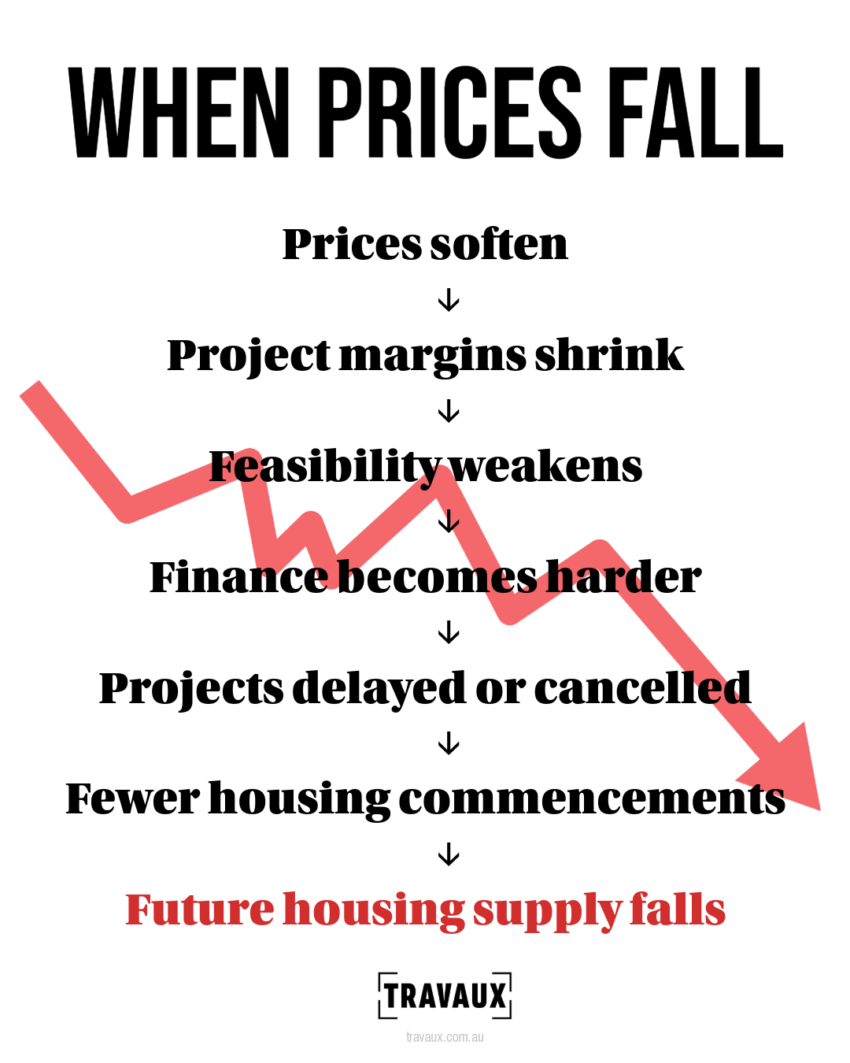
A cooler market doesn't automatically create more housing.
It’s tempting to think lower prices will solve housing supply.
Sometimes they help.
But if falling prices reduce the number of viable projects entering construction, today’s market relief becomes tomorrow’s supply problem.
That’s the housing paradox.
The market can cool while the housing shortage continues.
In fact, it can make it worse.
Australia has committed to delivering 1.2 million new homes over five years. That target depends on thousands of different individual projects reaching construction.
If fewer projects remain viable, the gap between housing targets and housing delivery will only widen.
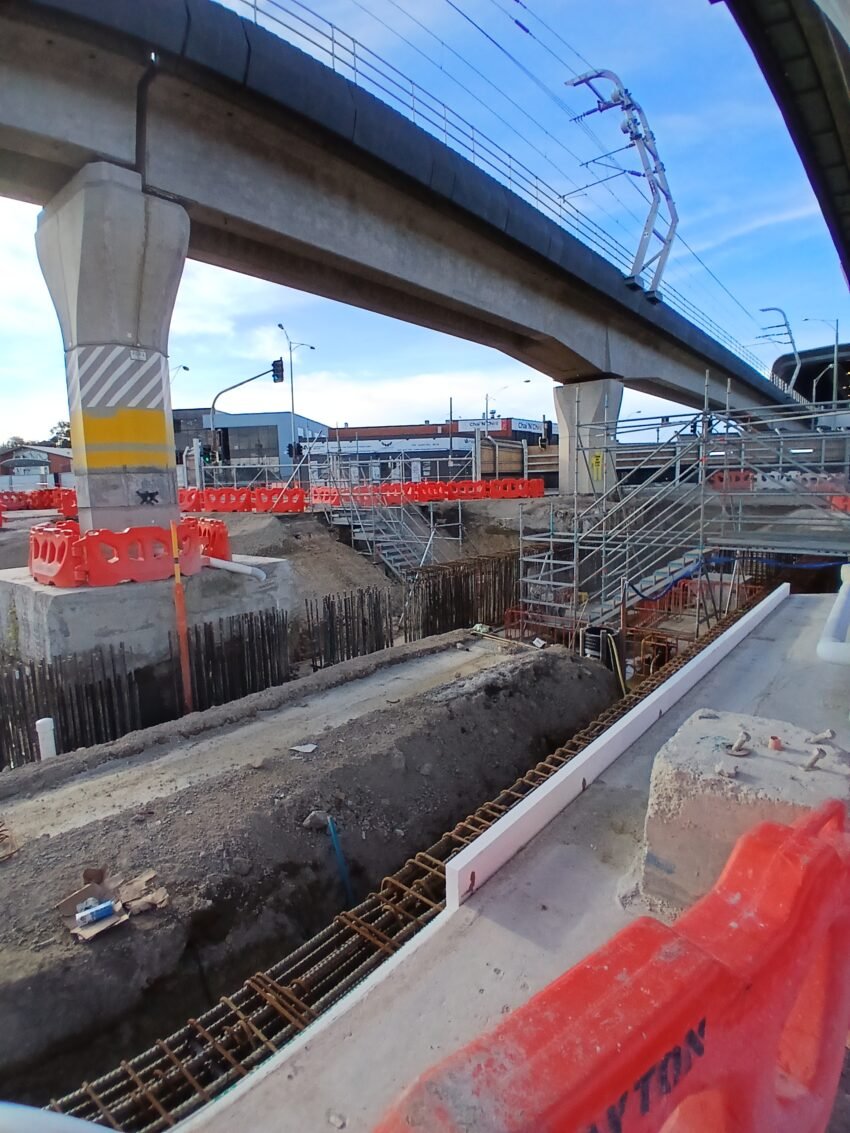
A walk through Clayton...
Earlier this week I visited the Suburban Rail Loop East project at Clayton.
Standing on site, one thing became obvious.
Projects aren’t delivered because one person makes one good decision.
They’re delivered because thousands of decisions stay connected over many years.
Engineers.
Planners.
Stakeholder managers.
Environmental specialists.
Contractors.
Government.
Communities.
Finance.
Logistics.
None of those pieces work in isolation.
Housing isn’t any different.
It’s not simply a planning problem.
It’s not simply a finance problem.
It’s certainly not just a construction problem.
It’s a delivery system.
When one link weakens, the entire chain slows.
What I'm watching
This month I’m paying less attention to median house prices and much more attention to the signals underneath them.
- Are more projects being redesigned?
- Are financiers becoming more cautious?
- Are developers delaying commencements?
- Are builders seeing enquiry levels fall?
- Will today’s softer market become tomorrow’s weaker housing pipeline?
Those questions won’t appear in many property reports.
But they’re the questions that determine how many homes Australia will actually deliver over the next three to five years.
Dispatch Housing Delivery Signals
| Signal | Status | Why it matters |
|---|---|---|
| House prices | ↓ | Margins under pressure |
| Construction costs | → High | Projects remain expensive |
| Buyer confidence | ↓ | Demand softening |
| Housing target | 1.2m homes | Delivery gap remains |
| Project viability | ⚠ Watching | Determines future supply |
Want to understand whether a development stacks up before spending thousands on consultants?
Travaux Build-Ready Reports help developers, investors and project teams assess planning constraints, feasibility risks and delivery considerations before committing to a site.
Final thought
House prices matter.
But they’re an outcome.
Housing delivery is the system that produces that outcome.
Until we pay as much attention to delivery as we do to prices, we’ll continue mistaking symptoms for causes.
And we’ll keep wondering why affordability never seems to improve.
FAQs
Lower house prices can help buyers, but affordability depends on more than purchase prices. If projects become less financially viable, fewer homes may be built, reducing future housing supply and limiting long-term improvements in affordability.
Housing delivery refers to the entire process of bringing new homes to market, from land acquisition and planning through finance, design, approvals, construction and completion. Successful housing delivery depends on every stage of the process working together.
Development feasibility is the assessment of whether a project is financially, technically and commercially viable. If costs rise or sale prices fall too far, projects may be delayed, redesigned or cancelled altogether.
Yes. A weaker property market can reduce project viability, making it harder to secure finance or justify construction. This may lead to fewer housing commencements and lower housing supply in the years ahead.
Developers continually reassess project viability. Falling sale prices, rising construction costs or tighter lending conditions can reduce profitability and increase risk, making some projects uneconomic to proceed.
No. Planning is only one part of the housing delivery system. Finance, construction costs, workforce availability, stakeholder engagement, infrastructure, market conditions and project feasibility all influence whether homes are ultimately delivered.
House prices are an outcome. Housing delivery examines the systems, decisions and constraints that determine whether homes are actually built. Understanding those delivery challenges provides greater insight into Australia’s long-term housing supply.
One of the greatest risks is declining project viability. When developments no longer stack up financially, fewer projects proceed to construction, reducing the number of homes delivered in future years.
Large infrastructure projects demonstrate that successful delivery depends on coordinated planning, finance, engineering, stakeholder engagement and construction. Housing projects rely on the same interconnected delivery system, even at a smaller scale.
House prices are reported every day because they’re easy to measure. But they don’t tell us how many homes will actually be delivered. Tracking project viability, commencements, completions and the health of the construction pipeline provides a clearer picture of Australia’s future housing supply.